The Egyptian Mau Cat: Rare Ancient Treasure of Time
Introduction: The Living Relic of Egypt’s Mystique
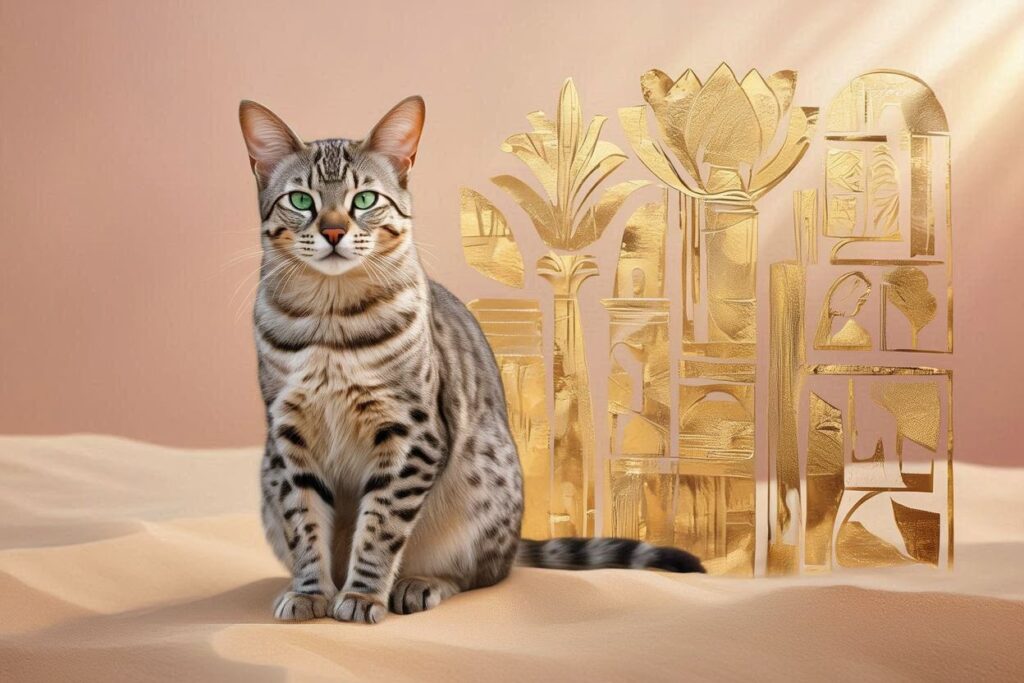
Long before the sleek housecats of today curled on couches, a divine, spotted feline roamed the sands and sacred grounds of Egypt — embodying protection, fertility, and spiritual power. The Egyptian Mau isn’t just a breed; it Is a living relic of one of the world’s greatest civilizations, a creature that has carried its mystical heritage across more than three millennia.
The word Mau Itself meant “cat” in ancient Egyptian, a simple yet profound reminder of how deeply entwined these animals were with daily life and spiritual belief. To the Egyptians, cats were not merely companions — they were guardians of grain, protectors of homes, and mediators between the mortal and divine.
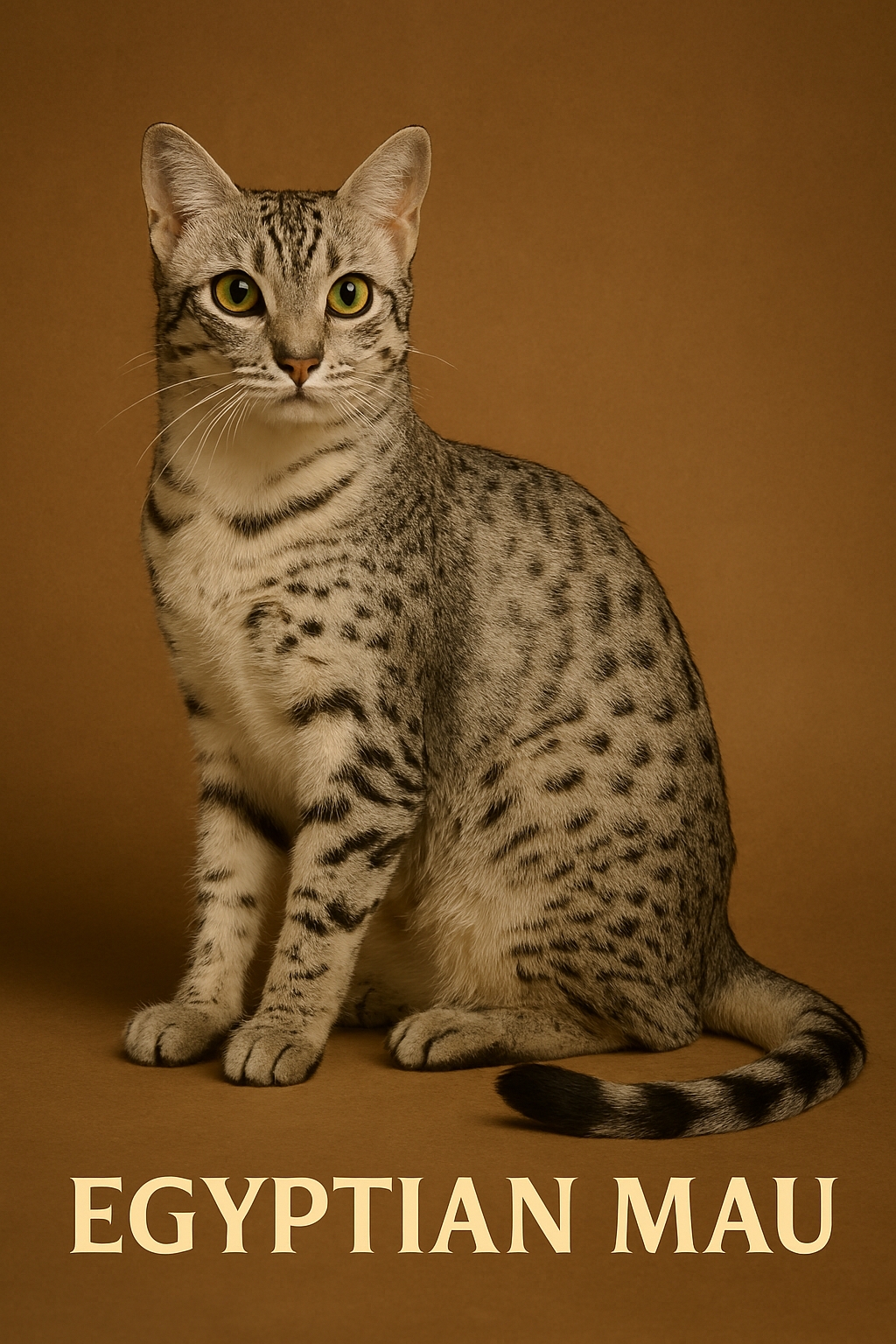
Today, the Egyptian Mau remains one of the rarest and most captivating breeds, celebrated for its natural spotted coat, lightning speed, and uncanny resemblance to the sacred felines immortalized in temple art. Owning or even encountering a Mau feels like touching history — a direct link to the sands of the Nile, the prayers of Bubastis, and the eternal guardianship of Bastet.
Archaeological Evidence: Guardians of the Past
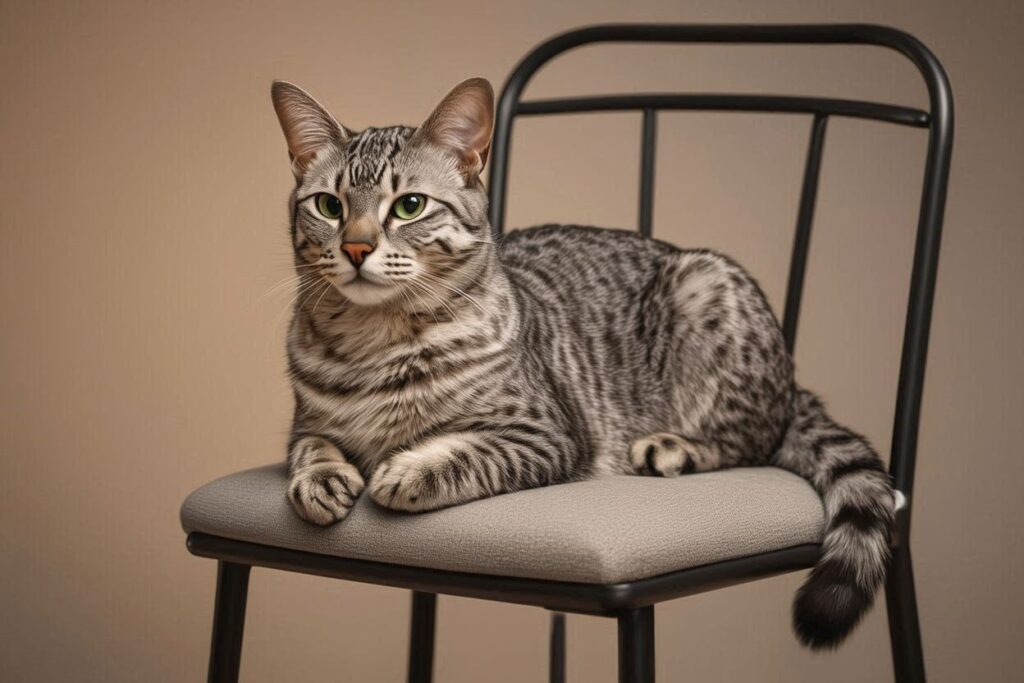
The story of the Egyptian Mau begins not in modern cat shows, but in the sands and tombs of Egypt’s most sacred sites. Archaeology reveals just how deeply cats were woven into the spiritual and daily life of the Nile Valley.
Saqqara Necropolis
At Saqqara, one of Egypt’s largest burial grounds, archaeologists uncovered thousands of mummified cats, carefully wrapped in linen and buried with offerings of food, toys, and amulets. These provisions suggest Egyptians believed cats required supplies in the afterlife, emphasizing their role as spiritual protectors. Cats were not buried as mere animals — they were honored as divine guardians, companions to pharaohs and nobles in eternity.
Historical Accounts
Greek historian Herodotus wrote of Egypt’s reverence for cats, noting that households went into mourning when a cat died, often shaving their eyebrows as a sign of grief. His accounts confirm that cats were not only sacred but deeply loved, entwined with family and ritual.
Legacy in Archaeology
From tomb paintings to temple reliefs, cats appear as protectors of grain, companions of women and children, and guides through the underworld. The Mau’s spotted coat and graceful form echo these depictions, making the breed a living relic of Egypt’s mystique.
Art and Iconography: Embodying Fertility and the Afterlife
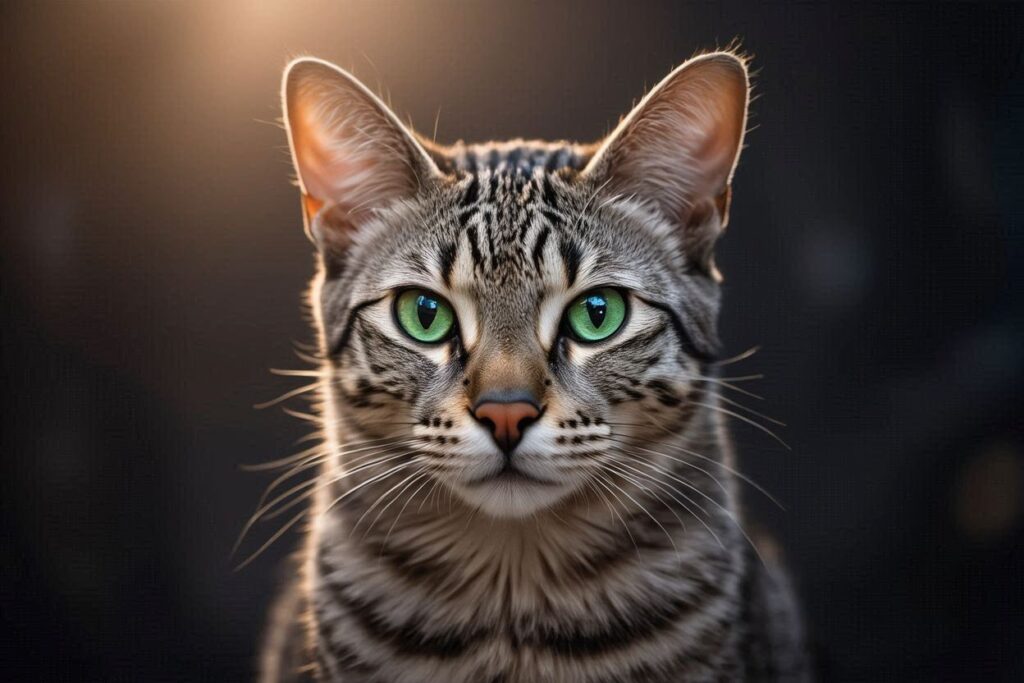
Egyptian art vividly captures the sacred role of cats, and the Mau’s spotted elegance is echoed across tombs, papyri, and temple walls.
Temple Reliefs and Household Scenes
Cats often appear in funerary art, guiding souls through the underworld or seated serenely beside women and children. These depictions symbolized Bastet’s dual role — protector of fertility and guardian of family. In household scenes, cats are shown beneath chairs, a detail that highlights their integration into daily life and their protective presence in domestic spaces.
Symbolism of Spots and Elegance
The Mau is one of the only naturally spotted domestic cats — its markings are not bred but genetically inherited. Ancient artists often emphasized these irregular spots, linking them to scarab symbolism and fertility motifs. Each Mau became a living talisman, its coat a canvas of divine protection.
Funerary Papyri and Mythic Imagery
In papyri and manuscripts, cats are depicted as guides of souls, their watchful eyes and poised stance embodying vigilance. The Mau’s graceful form was celebrated in poetry and hymns, described as swift as arrows and radiant as the sun.
Legacy in Iconography
From temple walls to household amulets, the Mau’s image was more than decoration — it was a spiritual safeguard. Its presence in art reinforced the belief that cats were mediators between the mortal and divine, guardians of fertility, and protectors of sacred spaces.
Physical Identity: Built for Speed, Flexibility, and Elegance
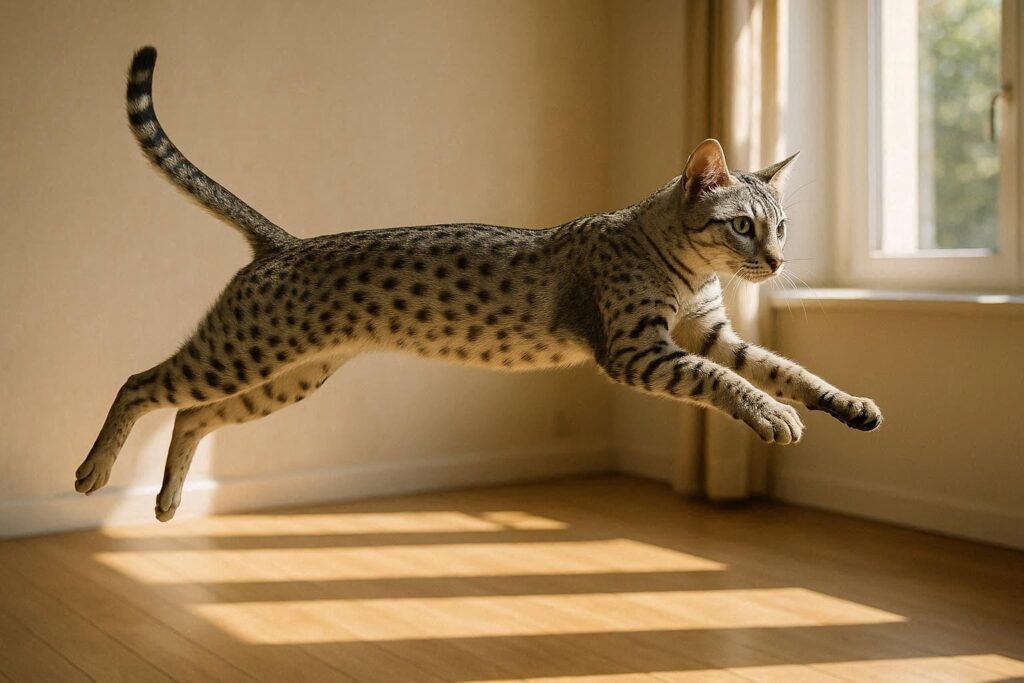
The Egyptian Mau is more than a relic of history — it is a living athlete, designed for speed, agility, and grace.
Speed and Agility
– Fastest domestic cat: The Mau can reach speeds of up to 30 mph (48 km/h), making it the sprinter of the feline world.
– Leaping ability: With a flexible spine and powerful hind legs, it can leap 6 feet into the air, a feat unmatched by most breeds.
– Fluid movement: Its slim, muscular frame allows dancer‑like agility, moving with precision and elegance.
Body Structure
– Muscular build: Despite its lean appearance, the Mau is strong, with long legs and a flexible spine that enhance speed.
– Paws & balance: Compact, oval paws provide stability during sprints and leaps.
– Tail: Medium‑length, tapering tail aids balance during rapid turns.
Coat and Adaptations
– Short, dense coat: Naturally water‑resistant, adapted for Egypt’s hot, arid climate.
– Spotted markings: Unique irregular spots are genetically natural, not bred — each Mau is a one‑of‑a‑kind masterpiece.
– Eye color: Striking green eyes, often described as “gooseberry green,” add to their mystical aura.
Comparisons
Unlike the Bengal or Ocicat, whose spots were selectively bred, the Mau’s markings are authentic relics of evolution. Its speed rivals that of athletic breeds like the Abyssinian, but its elegance and natural heritage set it apart as a living symbol of Egypt’s mystique.
Genetic Lineage and Preservation: Guardians of Heritage
The Egyptian Mau is more than a striking spotted cat — it is a living thread that ties modern felines back to the earliest domesticated cats of the Nile Valley.
Ancient Lineage
Genetic studies confirm that the Mau descends directly from wild ancestors that roamed the Nile Valley and Middle East. Its naturally occurring spots are not the product of selective breeding, but a preserved trait that has endured for thousands of years. This makes the Mau one of the most authentic living links to Egypt’s sacred cats.
Preservation Through Time
For centuries, Maus were safeguarded in temples, royal courts, and Bedouin tribes. Their agility, beauty, and spiritual symbolism ensured their survival even as other breeds faded or were reshaped by human intervention. Unlike modern spotted breeds such as the Bengal or Ocicat, the Mau’s markings are genetic relics, not artificial creations.
Guardians of Heritage: Princess Nathalie Troubetskoy
In the mid‑20th century, the Egyptian Mau faced the risk of fading into obscurity outside its homeland. It was Princess Nathalie Troubetskoy who became the modern guardian of this ancient breed. Living in Italy, she imported cats directly from Egypt in the 1950s, establishing the foundation bloodlines that would later spread across Europe and North America.
Her vision and dedication safeguarded the Mau’s authenticity — preserving its natural spotted coat, athletic lineage, and distinctive green eyes. Thanks to her efforts, the Mau gained recognition in cat associations worldwide and continues to thrive today as one of the rarest yet most authentic living links to Egypt’s sacred felines.
Modern Rarity
Today, the Egyptian Mau is one of the rarest cat breeds in the world, with only a few thousand registered globally. Dedicated breeders in Europe and North America prioritize authenticity, working to maintain the Mau’s natural coat patterns, athletic lineage, and distinctive green eyes. Genetic testing is often used to ensure bloodlines remain pure, protecting the breed’s heritage from dilution.
Why Preservation Matters
The Mau is not just a cat — it is a living heritage species, a guardian of Egypt’s mystique. Preserving its lineage safeguards a piece of human history, ensuring that the divine spotted feline celebrated in temples and tombs continues to walk among us today.
Recognition and Modern Popularity: From Pharaohs to Cat Shows
The Egyptian Mau has carried its mystique from ancient temples into the modern world, where it continues to captivate audiences with its rare beauty and athletic grace.
Ancient Reverence
Long revered among pharaohs and nobility, the Mau was celebrated as a sacred guardian. Its spotted coat and swift movements were immortalized in art and poetry, ensuring its reputation endured across centuries.
Modern Cat Shows
Today, the Mau is recognized by major cat associations such as the Cat Fanciers’ Association (CFA) and The International Cat Association (TICA). Judges often praise not only its striking spotted coat but also its fluid, athletic movement — traits that set it apart from other breeds. In competitions across Europe and North America, Maus frequently win “Best in Show” titles, their exotic elegance leaving lasting impressions.
Social Media and Global Admiration
In the digital age, the Mau’s rarity and beauty have amplified its popularity. Videos showcasing their lightning speed, graceful leaps, and bird‑like vocalizations attract millions of views. Their natural spots, unlike the selectively bred markings of Bengals or Ocicats, make them icons of authenticity and heritage.
Rarity, Demand and Fading Presence
With only a few thousand registered worldwide, the Mau remains one of the rarest domestic cat breeds. This rarity enhances its allure, but it also highlights a sobering reality: the Mau Is quietly fading from mainstream awareness. Overshadowed by more common breeds like Persians, Bengals, and Maine Coons, the Mau risks slipping into obscurity despite its cultural significance. Without active preservation and advocacy, this living relic of Egypt’s mystique could become a forgotten treasure rather than a celebrated guardian.
Cultural Significance: Guardians of Mystique
The Egyptian Mau is more than a spotted feline — it is a cultural symbol that has carried Egypt’s reverence for cats across millennia.
Bastet’s Divine Connection
The Mau was closely linked to Bastet, the goddess of home, fertility, and protection. In temples, Bastet was often depicted with the head of a lioness or domestic cat, embodying both ferocity and nurturing. Maus, with their spotted coats and graceful movements, were seen as living reflections of her divine guardianship.
Reverence and Rituals
Ancient Egyptians treated cats with extraordinary respect. Historical accounts describe households mourning deeply when a cat died — even shaving their eyebrows as a public sign of grief. Killing a cat, even accidentally, was punishable by death, underscoring the sacred status of these animals. Maus were not just pets; they were protectors of homes, temples, and families.
Symbol of Speed and Loyalty
Legends describe Maus as hunters swift as arrows, moving with lightning speed through sacred grounds. Their agility became a metaphor for vigilance and loyalty, qualities prized by both pharaohs and common households.
Modern Echoes
Today, the Mau remains a cultural icon. Its rarity and authenticity make it a living relic of Egypt’s mystique, celebrated by breeders, historians, and cat lovers worldwide. Yet its fading presence in mainstream awareness adds urgency: the Mau must be treasured not only as a breed but as a guardian of cultural heritage, ensuring Egypt’s devotion to cats is never forgotten.
Health, Care and Grooming
The Egyptian Mau may be a living relic of Egypt’s mystique, but it is also a companion in modern homes. Understanding its health, care, and needs ensures this rare breed thrives today.
Health and Lifespan
– Average lifespan: 12–15 years, with some living longer under attentive care.
– General health: Maus are considered a healthy breed, but like all cats, they benefit from regular veterinary check‑ups.
– Potential issues: Some Maus may be prone to heart conditions (hypertrophic cardiomyopathy) or obesity if not given enough exercise — though their natural athleticism usually keeps them lean.
Grooming and Care
– Coat maintenance: Their short, dense coat is low‑maintenance. Weekly brushing helps reduce shedding and keeps the coat glossy.
– Activity needs: Maus are highly active and thrive with climbing trees, puzzle toys, and interactive play. Their speed and agility mean they need space to sprint and leap.
– Diet: A balanced, protein‑rich diet supports their muscular build and high energy levels.
Personality in Homes
– Maus are affectionate but not overly clingy. They bond closely with their families, often following owners from room to room.
– They are intelligent, curious, and playful — water games, fetch, and puzzle toys are favorites.
– Their bird‑like vocalizations (chirps and trills) make them uniquely expressive companions.
FAQ
- Are they hypoallergenic?
No, Maus are not hypoallergenic, though their short coat produces less dander than long‑haired breeds.
- Are they good with families?
Yes — they are loyal, gentle, and protective, making them excellent companions for households with children.
- Why are they rare?
Limited breeding programs and strict preservation of authentic bloodlines mean only a few thousand Maus exist worldwide.
- Do they need special care?
Beyond regular grooming and exercise, Maus thrive on attention and enrichment. Their rarity makes responsible ownership vital to preserving the breed.
Conclusion: Eternal Guardian of the Nile
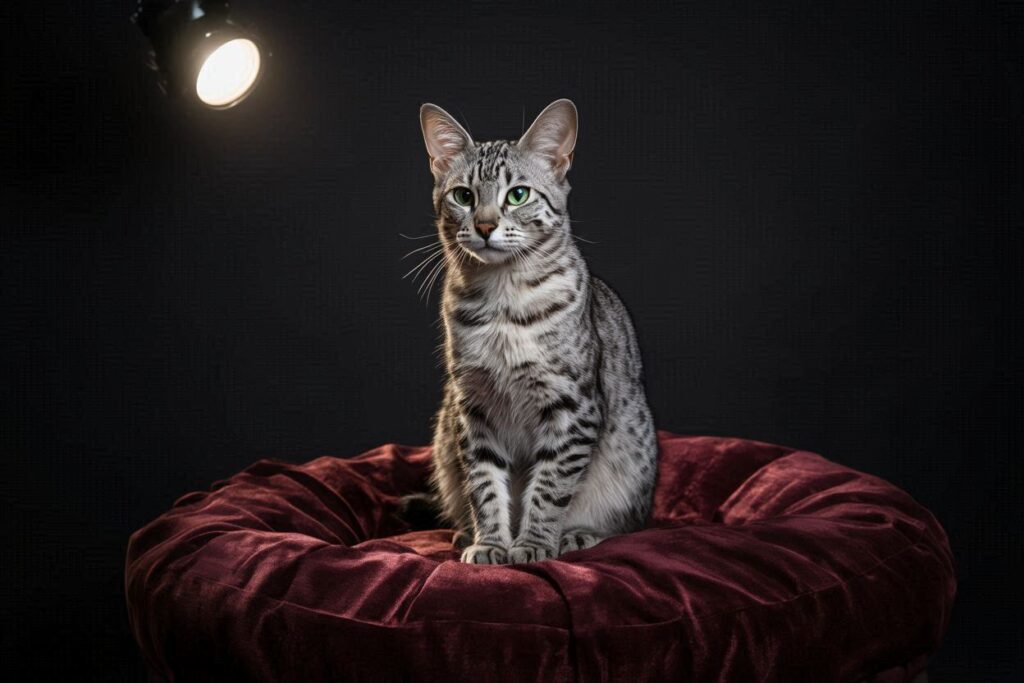
The Egyptian Mau is not simply a cat — it is a living echo of temples, tombs, and whispered prayers along the Nile. Its spotted coat carries the artistry of ancient reliefs, its green eyes mirror the eternal gaze of Bastet, and its speed recalls the hunters that once protected Egypt’s grain and homes.
Though rare today, each Mau is a treasure — a guardian of heritage, a bridge between past and present. To encounter one is to touch history, to feel the heartbeat of a civilization that revered cats as divine protectors.
As the sands of time shift and breeds rise and fade, the Mau endures as a reminder: beauty is not only in form, but in legacy. To preserve the Mau is to preserve Egypt’s devotion, ensuring that the sacred guardian of the Nile continues to walk among us, graceful and eternal.
To Read More
External Links:
Cat Fanciers’ Association — Egyptian Mau Breed Profile
The International Cat Association — Egyptian Mau Standard
Archaeology of Saqqara Necropolis
Image Credit
A big thank you to Microsoft for the images provided.
Read more on our other stories
Black Cat: Mystery of the Ancient Time & Magic