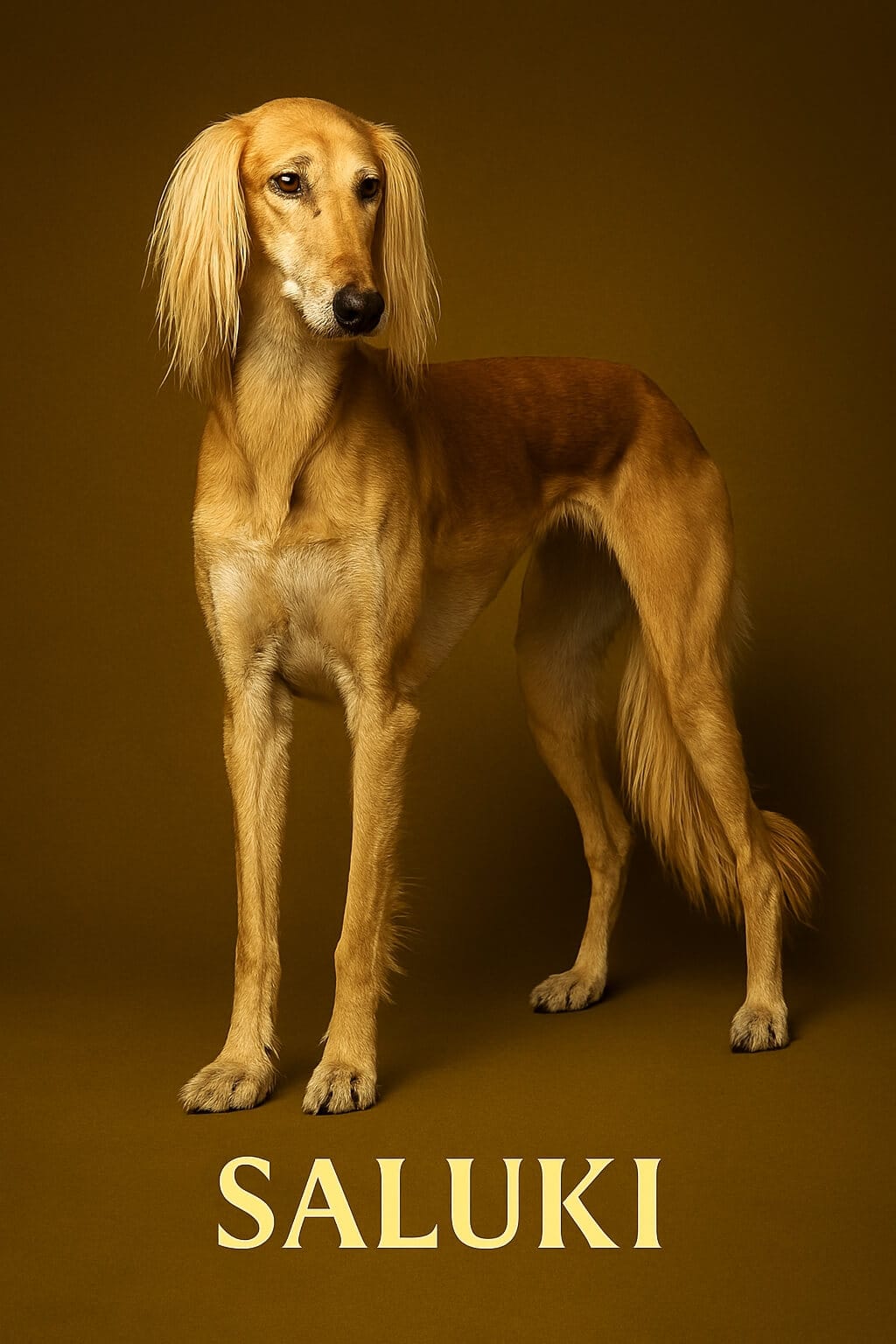
Saluki Dog: Secrets of the Ancient Spirit & Royal Hunter
Introduction
The Saluki Dog — a living link between ancient deserts and modern homes.
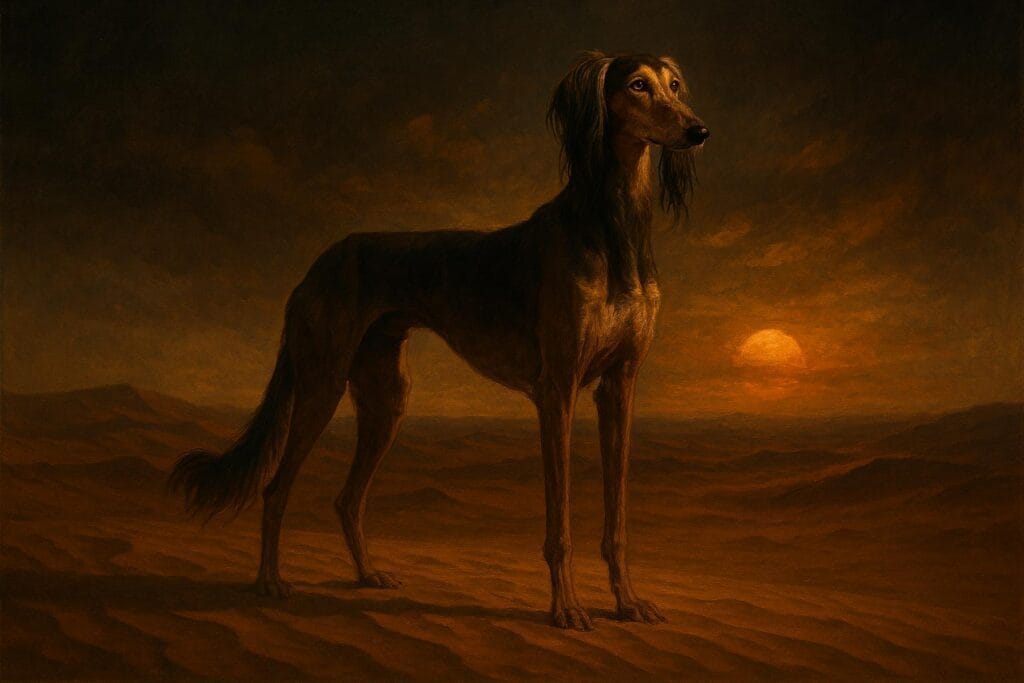
Graceful as the desert wind and swift as the gazelle, the Saluki Dog stands as one of the oldest and most elegant dog breeds known to humankind. For over 5,000 years, this noble hound has hunted alongside desert nomads, earning reverence as a royal companion and tireless hunter. Enduring through millennia, the Saluki remains a living symbol of endurance, beauty, and heritage—where ancient tradition meets modern companionship.
Ancient Origins of the Saluki: A Desert Legacy
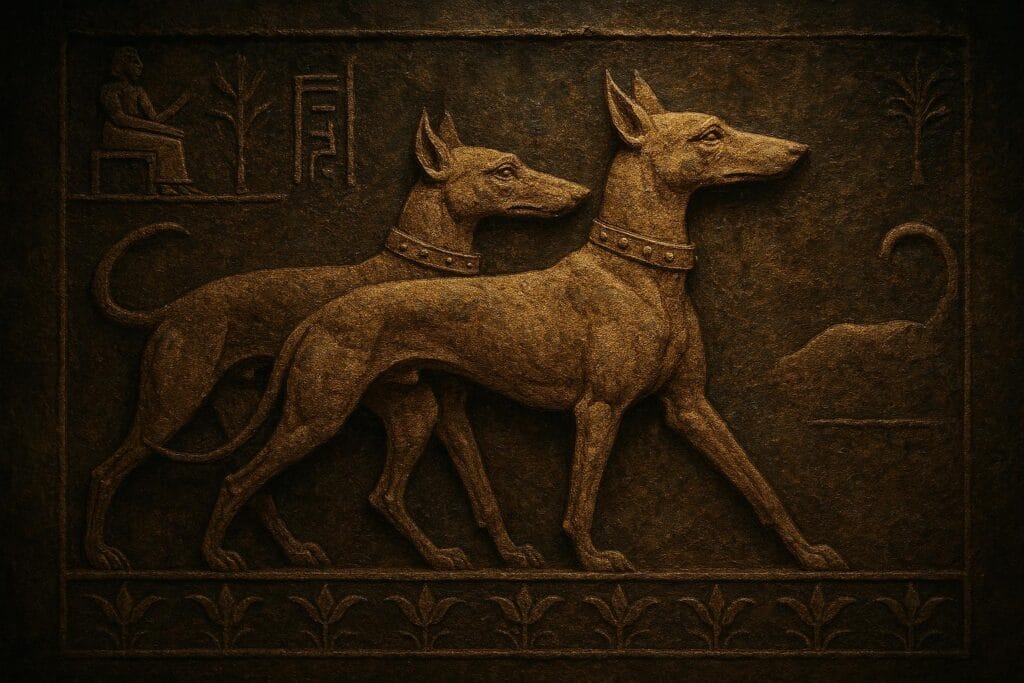
The Saluki’s story stretches back thousands of years to the sands and oases of the Middle East. Archaeological discoveries—including carvings and paintings in ancient Mesopotamian ruins and Egyptian tombs—depict dogs remarkably similar to today’s Saluki, attesting to its deep-rooted history.
Regarded as a divine gift to humanity, Salukis were highly prized by kings, nobles, and desert tribes alike. The Bedouin tribes called it the “Gazelle Hound,” relying on its unparalleled speed and stamina to pursue swift antelope and other desert game. Over centuries, the Saluki transcended its role as a hunter to become a cherished family member and cultural treasure.
Fun Fact: In Islamic tradition, the Saluki is considered ritually pure, often welcomed inside tents and homes—an honor reflecting its esteemed status.
The Saluki in Ancient Egyptian Royalty: “El Hor” — The Noble One
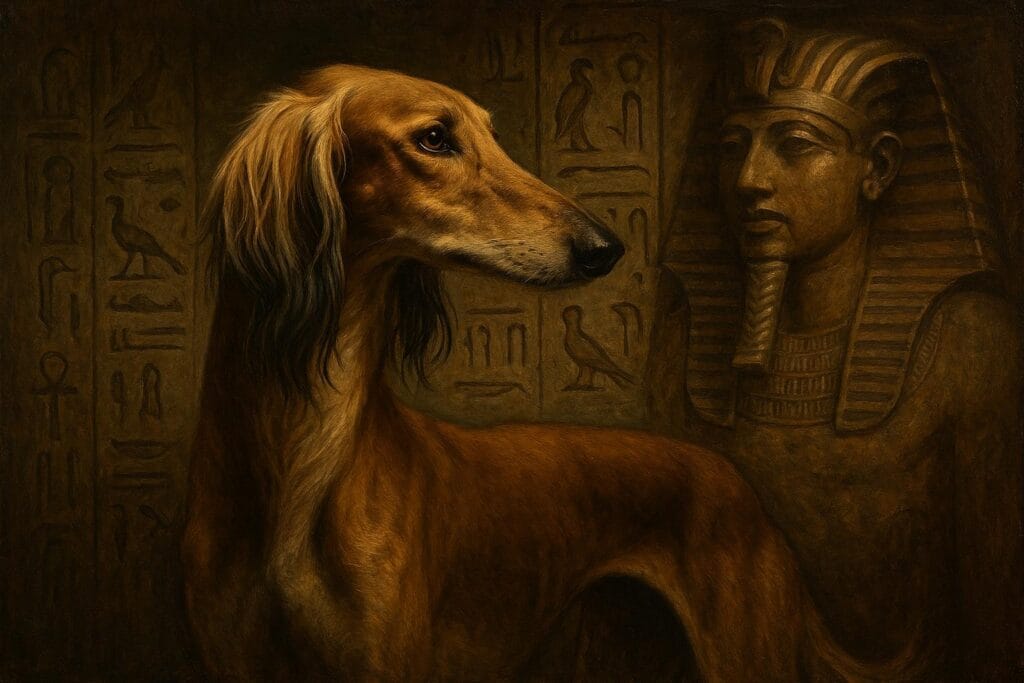
During Egypt’s golden age, the Saluki was far more than a hunting dog—it was a royal confidant. Known as “El Hor” or “The Noble One,” the Saluki was one of the few animals allowed within the Pharaohs’ quarters.
Archaeologists have found mummified Salukis in tombs, a testament to the belief that the bond between noble dog and owner extended beyond death. Hieroglyphics and wall paintings vividly portray Salukis running alongside rulers like Tutankhamun, symbolizing power, grace, and divine blessing.
Pharaohs admired the Saluki’s silent, floating gait, seeing it as a reflection of cosmic harmony. In keeping with this reverence, Salukis were never sold for money but exchanged as prestigious gifts among royalty—a practice that preserved the breed’s purity for centuries.
Today’s Saluki still carries the silhouette that once graced ancient palace halls, a living link to a storied past.
Physical Traits and Speed: Built Like the Desert Wind
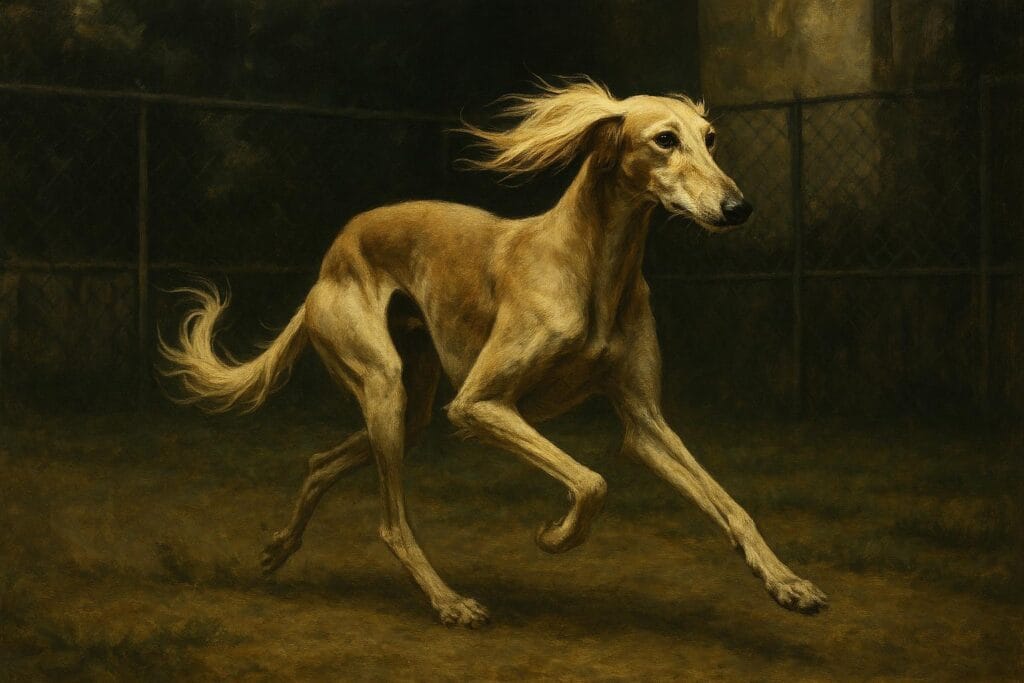
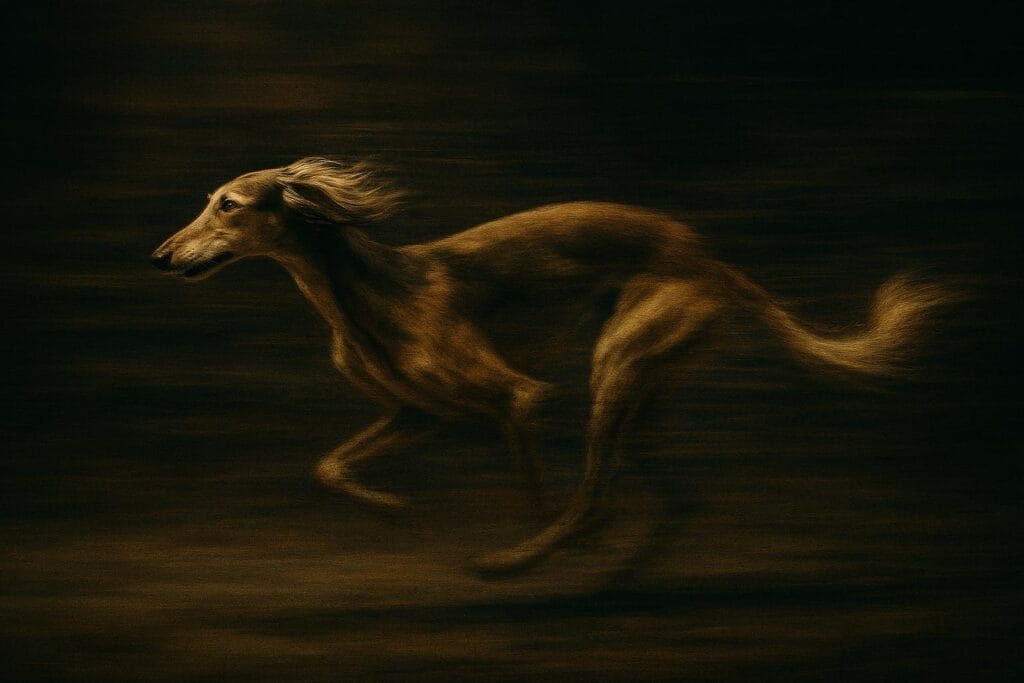
The Saluki’s lithe frame is a masterpiece of desert adaptation — built for speed, endurance, and silent efficiency. It can reach up to 40 miles per hour, making it one of the fastest dog breeds in the world.
Key Physical Features
– Deep chest for powerful lung capacity and stamina
– Lightweight skeletal structure for agility and speed
– Long, flexible legs for rapid acceleration and graceful pursuit
– Thick, padded feet that protect against scorching desert sands
– Narrow waist that enhances aerodynamic movement
The coat may be smooth or feathered, with colors ranging from cream, fawn, red, grizzle, black and tan, to pure white. Whatever the hue, Salukis move with an ethereal, floating grace — reminiscent of gazelles bounding across dunes.
Fun Fact: Owners often describe the Saluki’s movement as “poetry in motion,” an effortless dance of speed and elegance.
Personality and Temperament: Graceful yet Independent

Despite their athletic power, Salukis are calm and gentle. They often bond closely with one primary owner, yet remain affectionate with the wider family.
Key Personality Traits
– Polite and reserved indoors
– Deeply loyal to trusted humans
– Cautious with strangers
– Independent thinkers with a sensitive spirit
Salukis value quiet companionship and are not overly demanding of attention. Their independence may be mistaken for aloofness, but it reflects centuries of solitary hunting and survival in harsh environments.
Training Approach
Salukis thrive with:
– Positive reinforcement and gentle guidance
– Consistent, patient training sessions
– Short, engaging lessons that respect their sensitivity
Harsh methods quickly erode trust and rarely succeed. Interestingly, despite their desert heritage, many Salukis enjoy water and playful splashing.
Fun Fact: Some Salukis delight in swimming or even splashing in bathtubs — a surprising trait for a desert breed
Genetic Heritage and Preservation: Guardians of Ancient Bloodlines
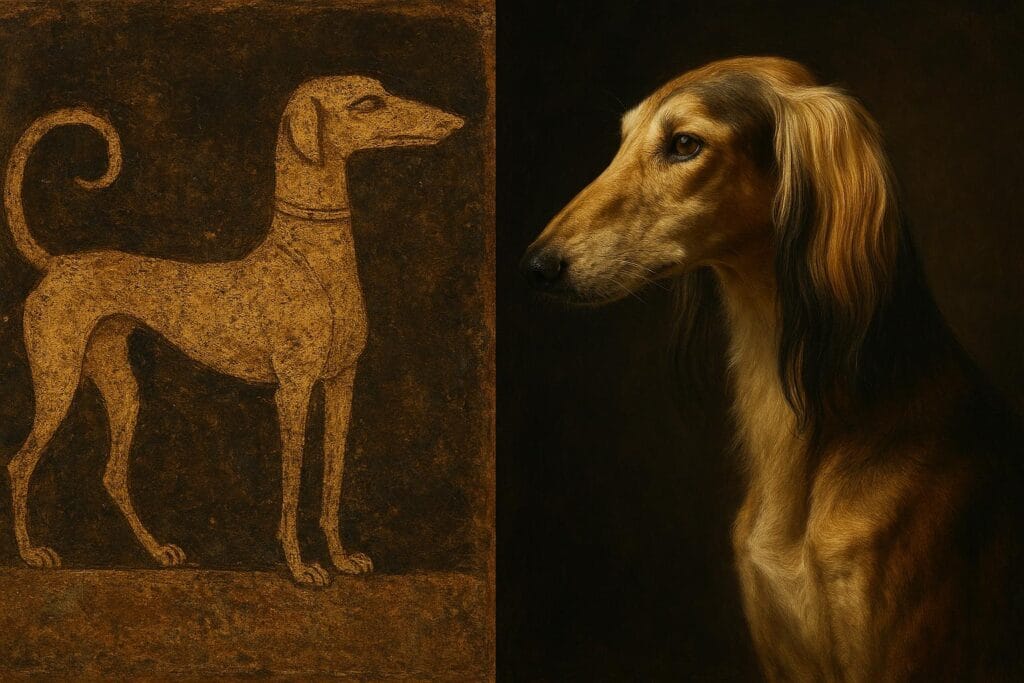
The Saluki is one of the oldest domesticated hunting breeds. Genetic studies confirm its ancient Middle Eastern origins. For centuries, Bedouin breeders and royal kennels protected its pure bloodlines, preserving the breed with care and reverence.
Today, organizations such as the American Kennel Club (AKC) and Fédération Cynologique Internationale (FCI) officially recognize the Saluki.
Dedicated breeders focus on:
– Maintaining genetic diversity
– Promoting long‑term health
– Upholding traditional traits
– Ensuring ethical breeding practices
These efforts safeguard the Saluki’s legacy as a living piece of history.
Recognition & Modern Popularity: From Desert Royalty to Global Stage
The Saluki’s journey from desert companion to international icon reflects centuries of admiration and evolving roles.
Its introduction to Europe in the 19th century marked a turning point. Explorers and dog enthusiasts brought Salukis from the Middle East, captivated by their elegance and speed. By the 1920s and 1930s, the breed gained popularity in Britain, often showcased in dog shows and admired by high society.
Today, Salukis excel in canine sports such as lure coursing, which highlights their natural hunting instincts, and agility competitions that showcase their grace and intelligence. These events keep the breed vibrant and relevant for modern enthusiasts.
Organizations like the Saluki Club of America and the Saluki Club UK promote breed education, health research, and preservation through shows, trials, and community events.
Fun Fact: In Western circles, Salukis were once called “Royal Dogs of Egypt,” a name that reflects their exotic allure and noble heritage.
Expanded Cultural Significance: Poetry, Art, and Spiritual Guardianship
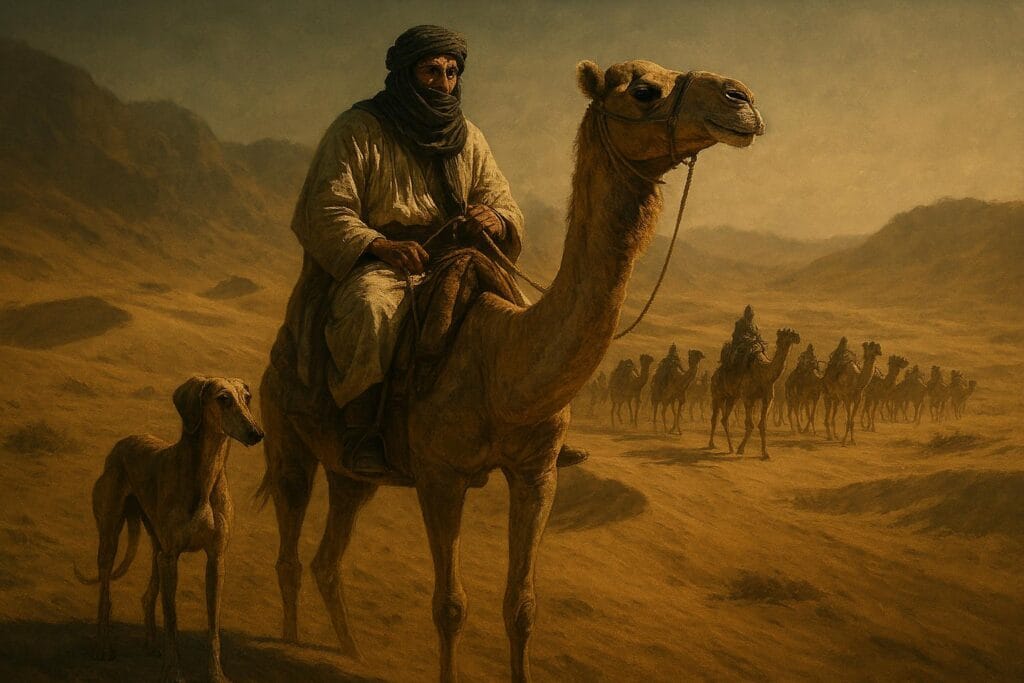
The Saluki’s cultural resonance runs deep, reflected in art, poetry, and tradition.
In Islamic poetry and Arabian art, Salukis symbolize grace, loyalty, and harmony between humans and nature. Poets praised their elegance and silent speed, weaving them into verses that celebrated desert life and divine favor.
Medieval hunting manuscripts from the Middle East often depict Salukis alongside falcons and horses, underscoring their role in the refined sport of desert hunting. These images highlight the breed’s noble status.
Among Bedouin tribes, the Saluki was more than a working dog — it was a spiritual protector. Before hunts, Salukis were sometimes blessed in ceremonies, believed to carry divine protection and ensure success. This sacred role deepened the bond between dog, owner, and nature.
The Saluki embodies harmony between desert tribes and their environment, symbolizing respect for tradition, endurance, and human‑animal partnership.
Fun Fact: Bedouin hunters considered harming a Saluki a grave misfortune, reflecting its spiritual significance.
Health & Care: Nurturing an Ancient Breed
Salukis are generally robust, with an average lifespan of 12 to 14 years. They often outlive other sighthounds such as the Afghan Hound and Irish Wolfhound. Still, awareness of breed‑specific health issues is essential.
Common Health Concerns
– Progressive Retinal Atrophy (PRA): a hereditary eye disease causing gradual vision loss; regular eye exams are vital.
– Cancer: sighthounds may be predisposed to certain cancers, making early detection important.
– Autoimmune disorders: rare but reported, requiring medical attention.
– Anesthesia sensitivity: Salukis have low body fat, making them more sensitive to anesthesia; veterinary care must be tailored accordingly.
Grooming
Salukis have low grooming needs. Feathered coats benefit from weekly brushing, while smooth coats require minimal upkeep. Occasional baths keep their coats clean and healthy.
Cost to Own: Financial Commitment Overview
Owning a Saluki requires thoughtful budgeting. Their needs are similar to other elegant sighthounds, with costs varying by region.
Approximate Monthly Costs
– Food: $70–$120 USD / €65–€110 EUR / R1,200–R2,200 ZAR
– Veterinary Care: $50–$100 USD / €45–€90 EUR / R900–R1,800 ZAR
– Grooming: Minimal (around $100–$200 USD yearly)
– Miscellaneous: Toys, training, insurance — varies by household
Total Monthly Cost: $120–$250 USD / €110–€220 EUR / R2,100–R4,000 ZAR
Practical Guide for Saluki Dog Owners
Is a Saluki Dog Good for Families?
Salukis are gentle and respectful. They thrive in calm homes, especially with older children who understand their sensitive nature.
Exercise Requirements
Salukis need consistent daily activity, including:
– Long walks
– Off‑leash runs in secure, fenced areas
– Mental stimulation through training and play
Without enough exercise, they may become bored and restless.
Apartment Living
Salukis can adapt to apartment life if exercised adequately, but they generally prefer homes with safe access to running spaces.
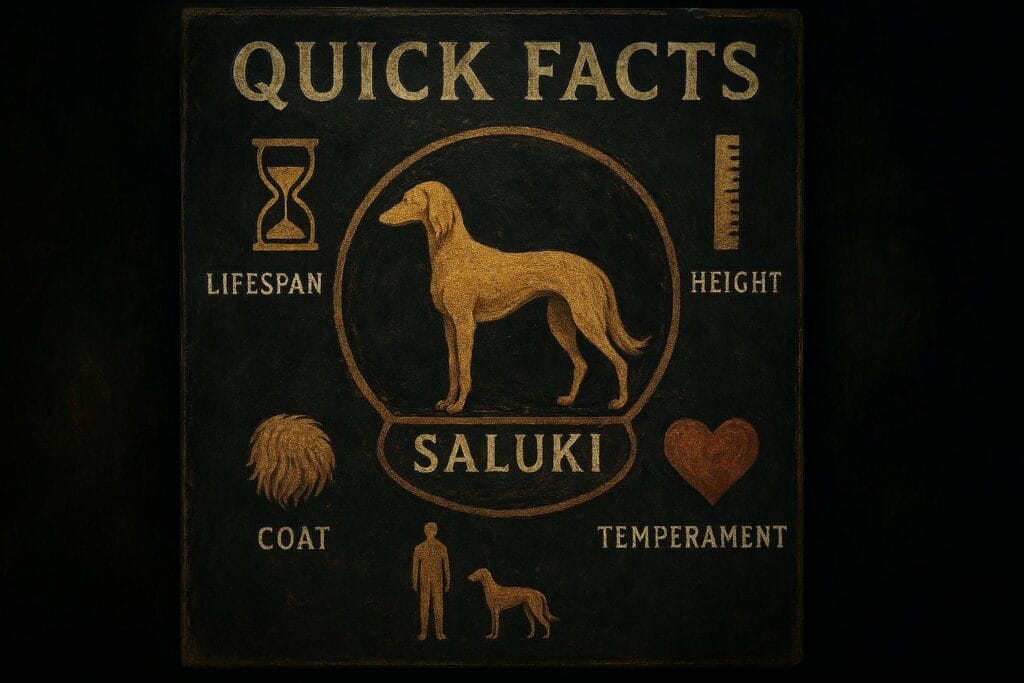
Saluki Quick Facts: The Aristocrat of the Sands
|
Feature | Details |
|
Origin | Ancient Middle East, desert regions |
|
History | Over 5,000 years old |
|
Lifespan | 12–14 years |
|
Height/Weight |
23–28 in (58–71 cm) / 35–65 lbs (16–29 kg) |
| Coat Type |
Smooth or feathered |
| Temperament |
Gentle, independent, loyal |
| Roles |
Hunter, companion, show dog |
| Top Speed |
Up to 40 mph / 64 km/h |
FAQ (frequently asked questions)
1. Do Salukis get along with other pets?
Yes. With proper socialization they coexist well with other dogs and cats, though their strong prey drive requires caution.
2. Are Salukis good watchdogs?
Not typically. They tend to be quiet and reserved, not inclined to bark frequently.
3. Do Salukis like water?
Many Salukis surprisingly enjoy swimming or splashing, despite their desert heritage.
4. How fast can Salukis run?
They can reach speeds up to 40 mph (64 km/h), ranking among the fastest dog breeds.
5. Are Salukis suitable for first‑time owners?
They are generally better suited for experienced owners who understand their independence and exercise needs.
6. Do Salukis need a fenced yard?
Yes. Secure fencing is essential to contain their speed and prey drive.
7. How much exercise does a Saluki need?
Typically 60–90 minutes of varied daily activity is ideal.
8. Are Salukis hypoallergenic?
No. They shed lightly but are not considered hypoallergenic.
9. How much grooming does a Saluki require?
Minimal. Weekly brushing for feathered coats is sufficient, while smooth coats need even less.
External Links and Breed Clubs
For those looking to dive deeper into official breed standards, health research, and conservation efforts, these high-authority organizations provide essential guidance:
Saluki Club of America – The official AKC Parent Club for the breed in the US.
The Saluki or Gazelle Hound Club (UK) – Providing breed education and support since 1923.
The Kennel Club (UK) Saluki Profile – Detailed health and breed standard information from the world’s oldest kennel club.
Conclusion — A Timeless Desert Hunter
The Saluki is far more than a companion dog. It is a living testament to thousands of years of partnership between humans and hounds. From Egyptian palaces to Bedouin deserts and modern homes, this breed embodies speed, grace, loyalty, and an aristocratic spirit.
For those who respect its independence and provide for its needs, the Saluki offers a rare connection to the ancient world. It remains a true aristocrat of the sands — enduring in elegance, resilience, and devotion.
Credit:
A big thank you to Microsoft for the provided images!
Also See
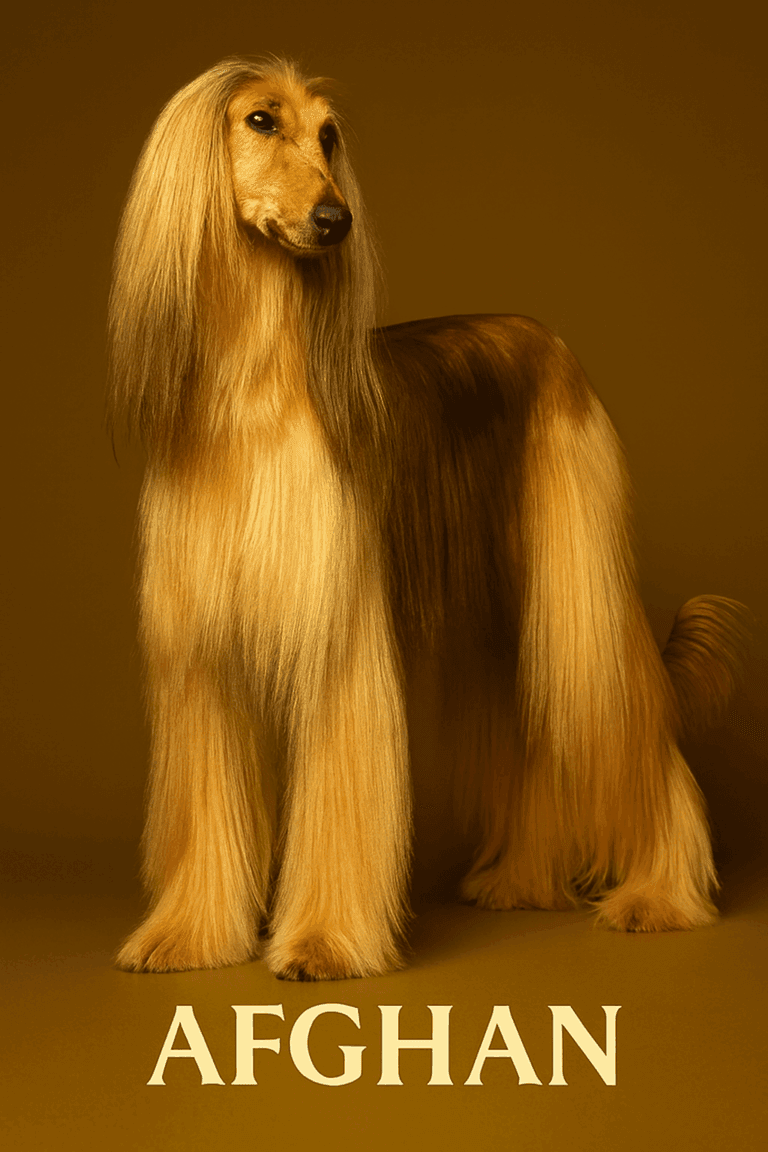
Explore the Afghan Hound — the mountain’s flowing silk, echoing the Saluki’s ancient grace.